In the past academic year, I successfully completed the MBA double-degree program at the Schulich School of Business, York University, in Canada. My decision to study overseas was driven by a desire to further broaden my international perspective and strengthen my cross-cultural communication skills — and the dual-degree program offered by Guanghua MBA was the perfect opportunity to gain an in-depth understanding of Western business school education, business environments, and social culture. What's more, after enrolling in the Guanghua MBA, through deep conversations both in and outside the classroom, I came to know classmates from diverse backgrounds and industries, each with their own colorful experiences. Their rich personalities and stories showed me the diversity of life and the infinite possibilities the world holds — and strengthened my resolve to expand my global horizons. And so, with the patient guidance of the International Office, I completed my application and arrived in Toronto, Canada, in September 2024, embarking on an eight-month dual-degree journey at the Schulich School of Business.
As one of York University's strongest and most reputable schools, Schulich enjoys high recognition across Canada, with an extensive and deeply rooted alumni network in the finance and technology industries in particular. Having completed all the credits required for graduation during my first year at Guanghua, I was able — beyond a handful of required courses — to freely choose electives based on my interests during my two semesters at Schulich, while actively participating in student clubs and corporate projects.
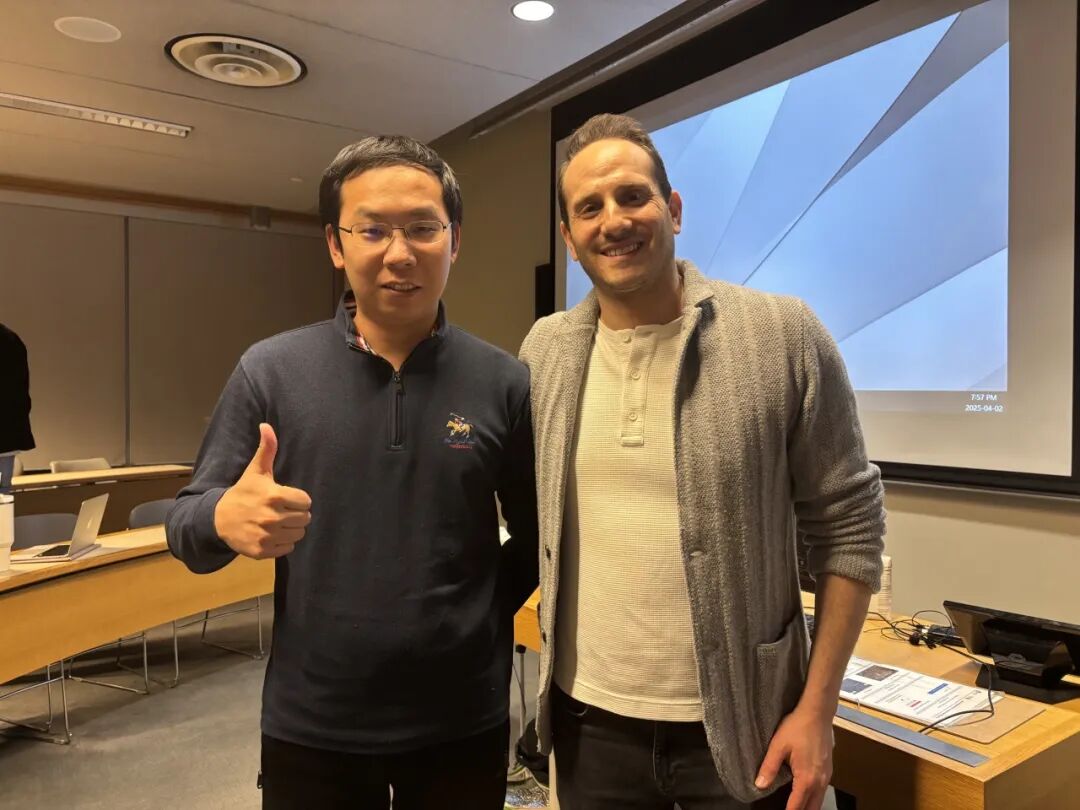

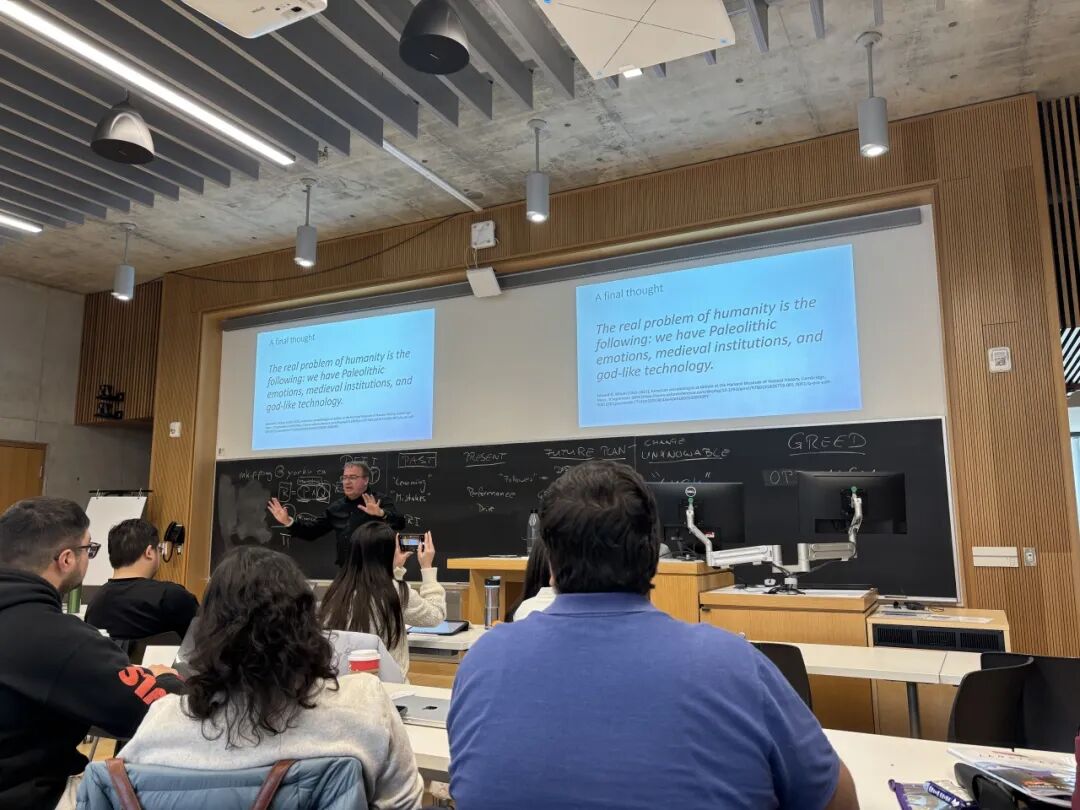
Among the many courses at Schulich,
Financial Institution Risk Management left a deep impression on me. A key component of the course was visiting the risk management departments at the headquarters of Canada's Big Five national banks, where we held face-to-face discussions with department heads and staff to learn about their risk management frameworks and how they evolved over time. For someone like me, who previously worked in banking, these sessions were not only a valuable opportunity to study the sound risk-control practices of Canadian banks, but also offered inspiration and lessons I could draw upon. Another course,
Personal Financial Planning, gave me a fairly systematic understanding of the legal provisions, tax features, and real-world cases behind Canada's various savings and investment vehicles — and, through them, a holistic picture of the country's social security system.
I also took the
Negotiations course. At first, I had concerns about whether my spoken English was up to the task, since simulated negotiation exercises made up more than half of the course. But the professor warmly encouraged me to enroll, emphasizing that "precisely because of that, this course will bring you even greater rewards." So I threw myself into it wholeheartedly, taking part in a wide range of negotiation exercises — business negotiations, family negotiations, written negotiations, and cross-cultural negotiations. The climax of the course was a two-week, roughly six-hour simulated negotiation between a labor union and corporate management. I was randomly assigned to the management team, and across two rounds of bargaining we had to fight for the best possible outcome for our side. This highly team-based, practice-driven training not only allowed me to apply and deepen the negotiation principles and techniques learned in class, but also gave me my first real insight into the dynamics and interaction patterns between Canadian companies and labor unions. It is also worth mentioning that another focus of the course was a group report on the business negotiation styles of a small country. My group consisted of six students from six different countries across four continents — a microcosm of the diversity of the Schulich student body.
Beyond regular coursework, one highlight of the Schulich MBA is the field consulting project that runs through both semesters (similar to the Integrated Practicum Project of Guanghua's full-time MBA). My group chose a Canadian company that provides course tutoring for university students. We analyzed the challenges it faced amid the current international landscape and presented our solutions to the founder on multiple occasions, ultimately earning high praise from the company. In this project, I was mainly responsible for financial analysis and forecasting, and I took part in every interview with the founder — gaining rare, first-hand experience of how a Canadian company actually operates.
In terms of career development, Schulich, like the Guanghua MBA, has a career development center that provides students with comprehensive and systematic support. Compared with China, Canada's labor market is smaller, and its workplace culture favors a more simple and direct style of networking. Through conversations with professionals from different industries and at different levels, I gained a great deal — and such conversations are also the most important channel for accessing key information and opportunities across Canadian industries.
Looking back on my eight months of study and life at Schulich, I not only improved my management thinking, industry insight, and cross-cultural communication skills, but also opened up new possibilities for my future career. I was fortunate to meet many classmates from Canada as well as from other countries in Asia, Africa, Europe, and the Americas. My deep exchanges with them taught me to see others' concerns and needs from a more well-rounded perspective, and gave me a genuine understanding of the worldviews and values of younger generations in different countries — experiences that added much valuable reflection to my time abroad. In today's fast-changing world, I believe such a platform for international exchange and learning is truly something to be treasured.

As graduation approaches, I am filled with emotion. I am grateful to the School for giving me the chance to step beyond my familiar horizons and explore a diverse world — a journey that was fulfilling and unforgettable, interweaving with my Guanghua MBA class experience into a beautiful symphony. Looking ahead, I hope that wherever we find ourselves after graduation, we will all carry confidence and courage as we keep exploring — to discover a bigger world, and a better self.

 用户登录
 光华首页